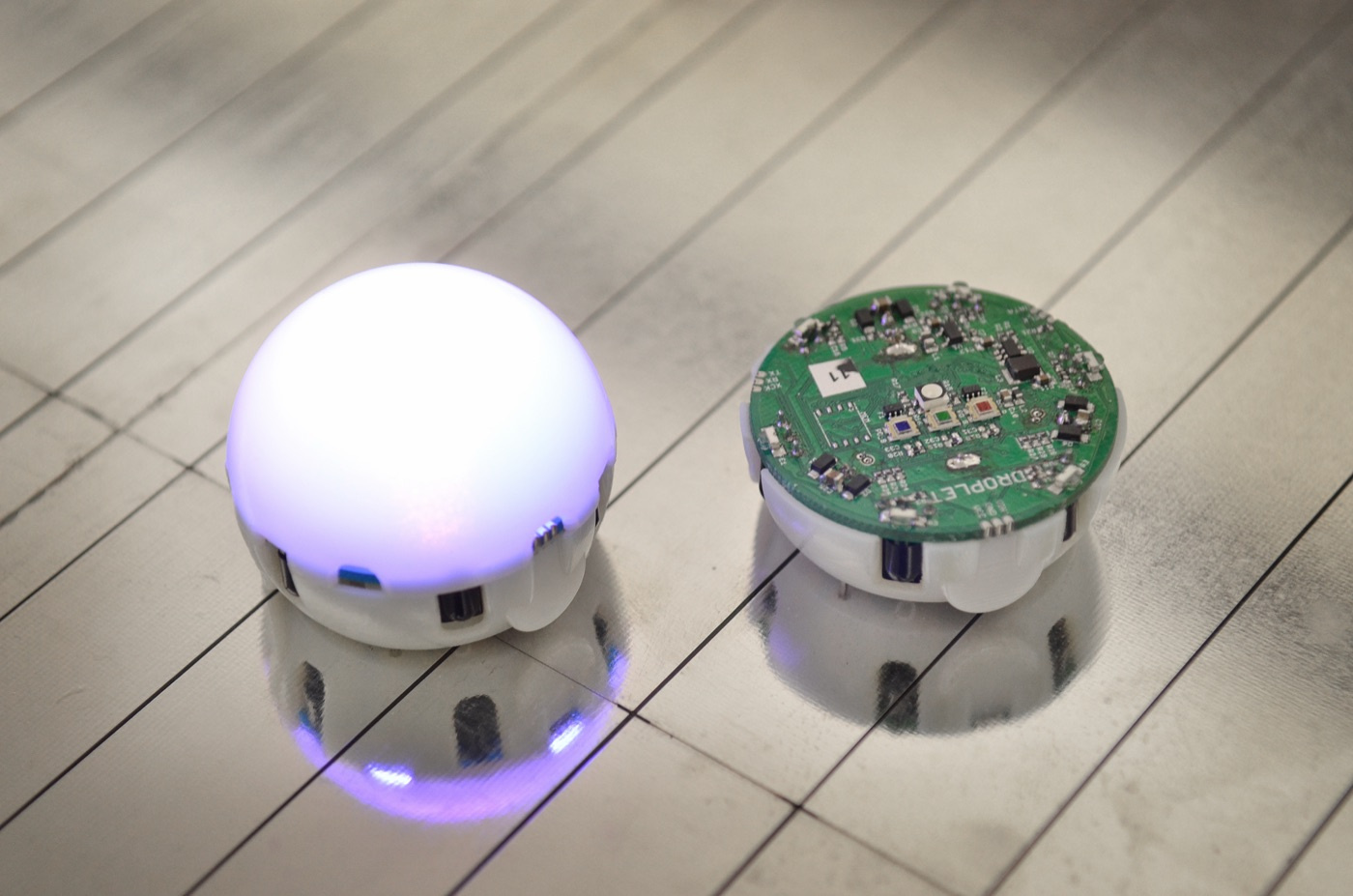
Give each part of a big job to an agent built for it.
Multi-agent systems let several specialist AI agents share one job, with a coordinator handing out the pieces and checking the result. We start by testing whether a single agent would do, because splitting adds cost, and design the team only when the work justifies it.
One in-house team since 2015 · Free audit, no obligation
COMMON PROBLEMS WE FIX
Multi-agent systems problems, and how we keep them manageable
More agents mean more moving parts. These are the concerns that come up when a task is shared between agents, with the design choices that keep the team under control.
01
“Do we really need several agents, or is that just more complexity?”
WHAT WE DOWe build the simplest version first, one agent with the right tools, and test it on your real cases. We split the job only where a single agent loses focus, mixes up instructions or needs different permissions.WHAT CHANGESYou add agents because testing showed a need, not because a design looked impressive.
02
“When agents pass work to each other, things get lost.”
WHAT WE DOWe define each handoff as a structured message: what was asked, what was done, what is still open. A shared task record holds the state, so no agent depends on remembering a conversation.WHAT CHANGESWork moves between agents with nothing dropped, and anyone can see where a task stands.
03
“If something goes wrong, I won't know which agent caused it.”
WHAT WE DOEvery agent step is traced with its inputs, tool calls, outputs and cost, grouped under the task it belonged to. When a result looks wrong, we follow the trace to the agent and the step responsible.WHAT CHANGESProblems are traced to a specific step and fixed there, instead of being guessed at.
04
“I'm afraid several agents will multiply our usage bill.”
WHAT WE DOWe set a spending ceiling and a step limit per task, route simple steps to smaller models, stop agents that loop and report cost per task, so you can see which part of the team is expensive.WHAT CHANGESCost stays visible and capped, so the team does not become an open-ended expense.
WHY IT MATTERS
Sometimes the job is bigger than one agent
A single agent given too many instructions, tools and responsibilities tends to lose its way. Its prompt grows long, its behaviour gets harder to predict and every change risks breaking something else. When the work divides naturally, as with gathering information, drafting, checking and filing, separate agents with narrow roles are easier to test and to restrict.
Splitting is not free. Each handoff adds cost, delay and a place for information to get lost, so we recommend a team of agents only when a single one has been tried and found wanting. Where the split is justified, a coordinator assigns the work, a shared record holds the state and a trace shows every step.
SIGNS YOU NEED THIS
One agent's instructions have grown long and tangled
Parts of the job need different permissions
The work divides into research, drafting and checking
BENEFITS
What multi-agent systems offer when one agent is not enough
What changes for your business once it’s done properly.
✓01
Focused specialists
Each agent gets one narrow role, its own instructions and only the tools it needs, which makes behaviour easier to test and permissions easier to limit.
✓02
Work in parallel
Independent parts of a job, such as research, drafting and checking, can run side by side and be combined by the coordinator at the end.
✓03
A second pair of eyes
One agent can review another's output against your rules before anything moves on, giving a built-in check that a person can inspect.
✓04
Clear accountability trail
Because each agent has a defined role and a trace, you can see who did what, and fix or replace one part without rebuilding the rest.
WHAT’S INCLUDED
What multi-agent systems design and build covers
01One-agent-or-many assessment
02Specialist agent design
03Coordinator and routing logic
04Handoff rules between agents
05Shared state and memory
06Failure handling and retries
07Cost limits per task
08Tracing of every agent step
TECHNOLOGY
Tools we build with.
LangGraph
CrewAI
OpenAI API
Claude
Redis
Python
WAYS TO WORK WITH US
01Fixed-scope projectA defined scope, timeline and price. Best for MVPs, websites and well-defined builds.
02Dedicated teamEngineers, designers and QA working as part of your team on a monthly basis.
03Support retainerOngoing maintenance, upgrades and improvements with agreed response times.
Workshops to understand your goals, users, process and constraints, ending in a clear scope and estimate.
02
Design
User flows, wireframes and clickable prototypes tested before development starts.
03
Build & test
Two-week sprints with a working demo each cycle, code reviews and automated tests.
04
Launch & support
Staged release, monitoring, training and ongoing support as you grow.
CLIENT REVIEWS
What clients say
Clutch★★★★★5.0Google★★★★★5.0
★★★★★
“Our Google Ads campaigns were burning through budget with little to show for it. All In One Marketing Pro stepped in and completely revamped our strategy, targeting the right audience and optimizing our ads for conversions and our website also google map. Within three months, our cost per lead dropped by 65%, and our ROI improved significantly. They solved a problem we thought was unsolvable! Thank you so much Lovi and all in one marketing team”
Alissa Mandzuk-PowerClient review
★★★★★
“We had no real strategy for social media before, but after working with All In One Marketing Pro, our engagement skyrocketed! Our Instagram and Facebook pages grew by over 150%, and we’re now getting consistent leads directly from social media. Their content is top-notch, and they truly understand how to turn followers into customers.”
N KaurClient review
★★★★★
“All in One Marketing has played a crucial role in the growth of my cardiology practice. Their targeted strategies have greatly enhanced patient engagement through social media, and by the second month of running Google Ads, we began seeing a steady influx of new patients. They are highly professional and results-driven! Thank you”
Emma NClient review
Reviews are in each client’s own words. Results differ from business to business, with the market, the budget and the starting point.
With All In OneWithout✓Use cases scoped to your workflows✕Generic chatbots✓Connected to your website, inbox and CRM✕Copy-paste between tools✓Hand-off to your team when needed✕Customers stuck with a bot✓Data protection and access controls✕Unclear data handling
One agent is enough when the task is narrow, the tools are few and the instructions stay short enough to test. Several agents help when parts of the job need different permissions, can run in parallel or benefit from one agent reviewing another. We test a single agent first and add more only when it clearly falls short.
Through structured messages and a shared task record. A coordinator receives the request, decides which specialist handles each piece and passes along exactly what that specialist needs. Each one returns a result in a set format, and the coordinator combines them or sends the task back. Rules decide what happens if an agent fails or returns something unusable.
Usually yes, since every agent step uses the model and handoffs add extra calls. That extra cost is worth paying only when the split makes the work more accurate, safer or faster to finish. We cap spending per task, use smaller models for simple steps and report cost by agent so you can see where the money goes.
Traditional software and workflow automation follow fixed steps, which makes them predictable and cheap to run. A multi-agent system chooses its own steps, so it can handle messier work, at the price of more cost and more to monitor. Where a fixed sequence will do, we recommend it. Agents are for the parts needing language understanding and judgement.